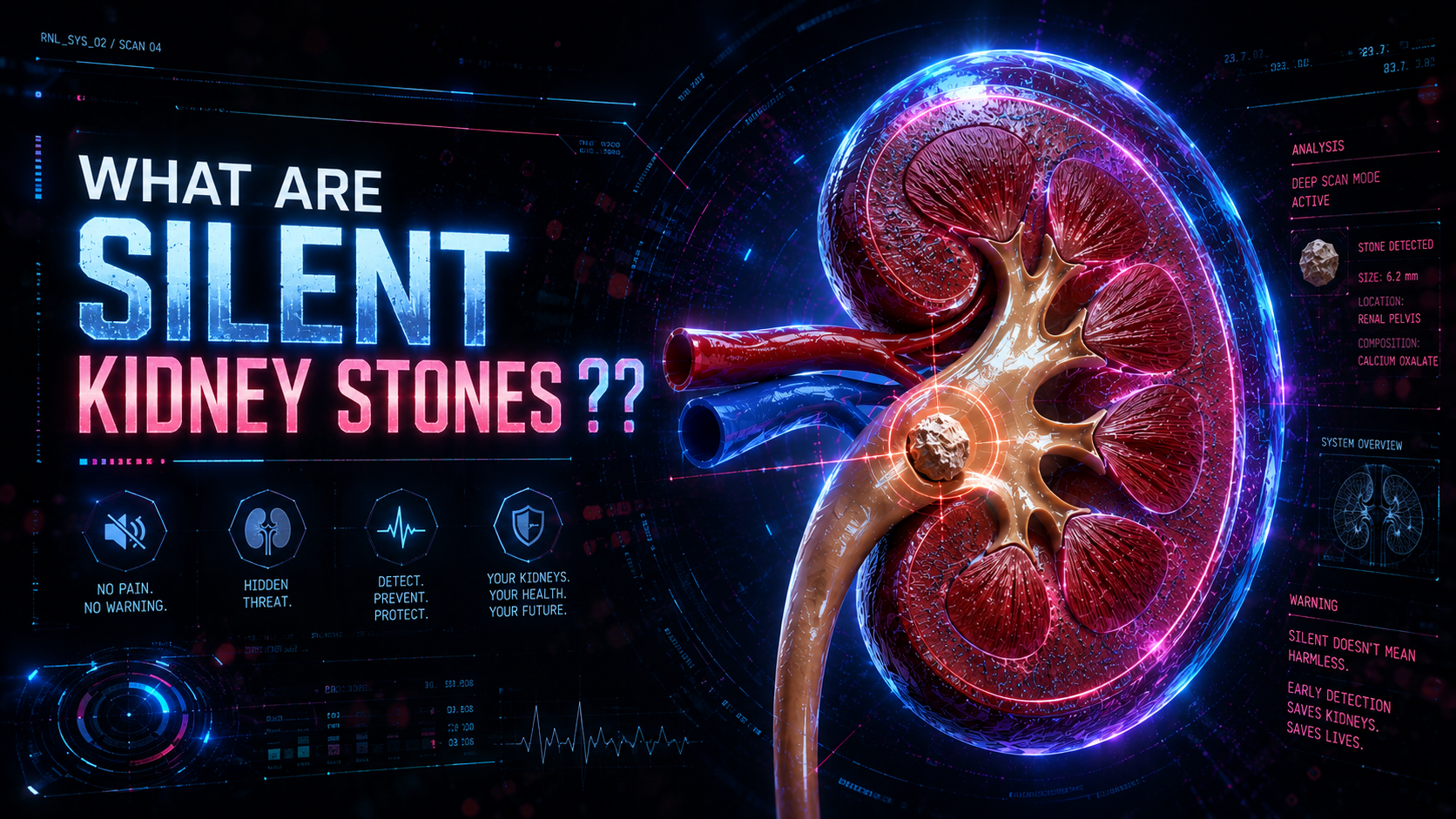
Can Kidney Stones Be Present Without Pain?
A kidney stone can remain inside the kidney for months or even years without causing any symptoms. In fact, many kidney stones are discovered accidentally during a health check-up or an ultrasound performed for another reason.
Why Don't Some Kidney Stones Cause Pain?
Pain usually occurs when a stone moves from the kidney into the ureter (the tube connecting the kidney to the bladder) and blocks the flow of urine.
A stone that stays inside the kidney without causing obstruction may not produce any pain at all. This is why some patients are shocked when a scan reveals a sizeable kidney stone despite having no symptoms.
Silent Kidney Stones: Warning Signs
Although a stone may not cause classic kidney stone pain, some patients experience subtle symptoms such as:
- Occasional discomfort in the back or side
- Blood in the urine
- Recurrent urinary tract infections
- Burning during urination
- Increased urinary frequency
- Nausea without an obvious cause
However, many silent stones produce no symptoms whatsoever.
Why Ignoring a Kidney Stone Can Be Dangerous
Even if a stone is not painful, it should not be ignored.
Over time, a stone can:
- Increase in size
- Cause recurrent infections
- Lead to blockage of urine flow
- Damage kidney function
- Become more difficult to treat
Larger stones often require more complex procedures than smaller stones detected early.
How Are Silent Kidney Stones Diagnosed?
Silent kidney stones are commonly detected through:
- Ultrasound of the kidneys
- CT scan (the most accurate test)
- X-rays in selected cases
- Health check-up imaging studies
Your urologist may recommend additional tests to determine the stone's size, location, and composition.
When Should You See a Urologist?
You should consult a urologist if:
- A kidney stone has been detected on any scan
- You notice blood in your urine
- You experience recurrent urinary infections
- You have a history of kidney stones
- You develop persistent back or flank discomfort
Early evaluation can help prevent future complications.
The Bottom Line
A kidney stone does not always announce its presence with severe pain. Many stones remain silent for long periods and are discovered only during routine imaging. While these stones may seem harmless, they can gradually grow and affect kidney health if left untreated.
If a kidney stone has been detected, even in the absence of pain, a consultation with a urologist can help determine whether observation or treatment is the best option.