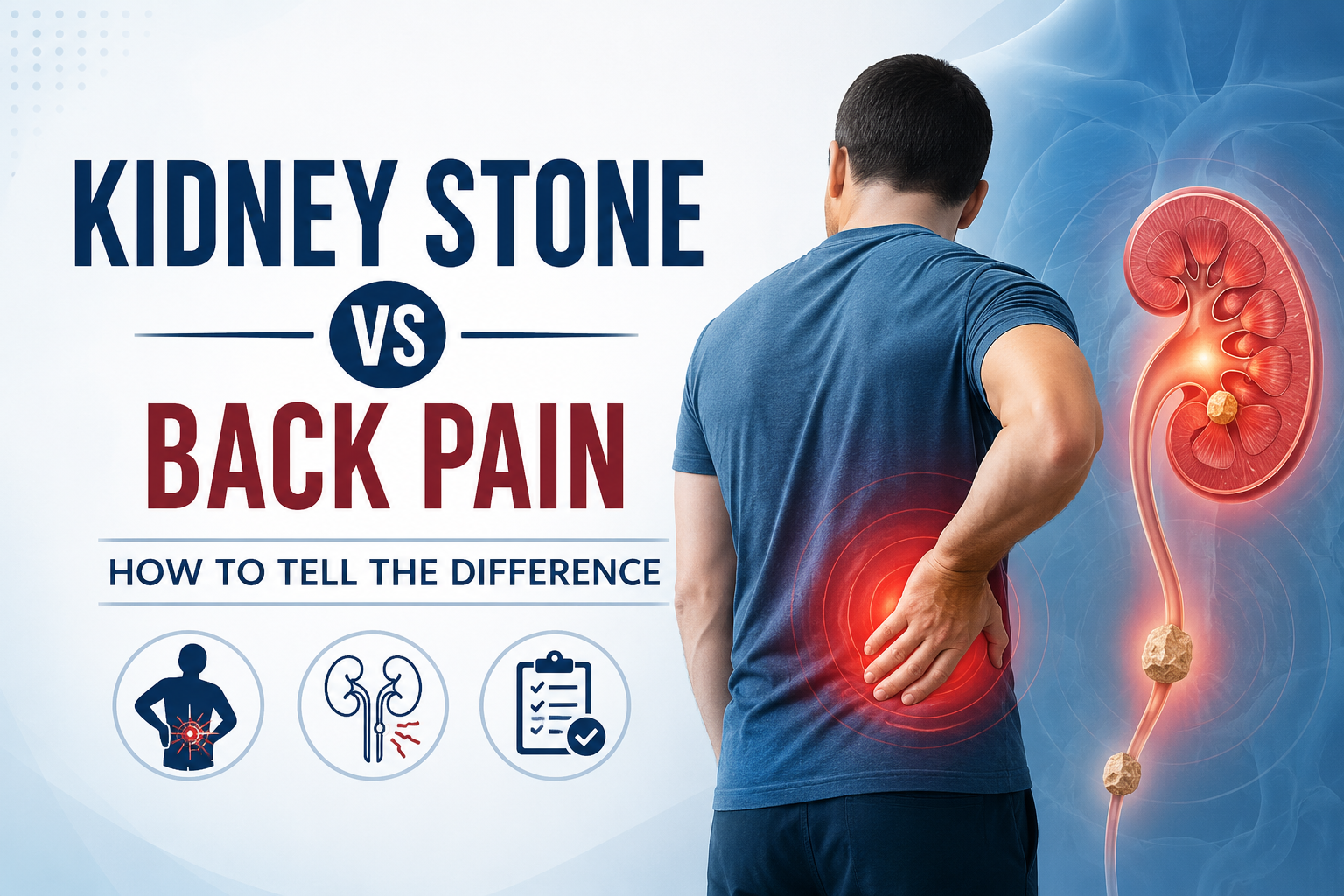
Kidney Stone vs Back Pain: How to Tell the Difference
Kidney Stone vs Back Pain: How to Tell the Difference
Back pain is one of the most common health complaints, and many people assume that pain in the lower back automatically means a muscle strain or a slipped disc. However, in some cases, the pain may actually be caused by a kidney stone.
Because the symptoms can sometimes overlap, it can be difficult to know whether your pain is coming from your back muscles or your urinary system. Understanding the differences can help you seek the right treatment at the right time.
What Is a Kidney Stone?
A kidney stone is a hard deposit made of minerals and salts that forms inside the kidneys. These stones can remain in the kidney or move into the ureter, the tube that carries urine from the kidney to the bladder. When a stone blocks the flow of urine, it can cause severe pain known as renal colic.
Where Is Kidney Stone Pain Felt?
Kidney stone pain usually begins suddenly and is commonly felt:
-
In the side of the abdomen (flank pain)
-
Just below the ribs
-
In the back, usually on one side
-
Radiating towards the lower abdomen, groin, or testicles in men
The pain often comes in waves and may change location as the stone moves through the urinary tract.
Where Is Muscular Back Pain Felt?
Back pain caused by muscle strain, poor posture, or a spinal problem is usually:
-
Located in the lower back or central back
-
Worsened by certain movements, bending, or lifting
-
Improved with rest, stretching, or pain medications
-
Associated with stiffness or muscle tenderness
Unlike kidney stone pain, muscular back pain usually stays in one area and does not radiate towards the groin.
Kidney Stone Pain vs Back Pain: Key Differences
| Feature | Kidney Stone Pain | Muscular Back Pain |
|---|---|---|
| Onset | Sudden | Gradual |
| Location | Side of the back, below ribs | Lower or central back |
| Nature of Pain | Severe, cramping, comes in waves | Dull, aching, constant |
| Radiation | To lower abdomen or groin | Usually stays in the back |
| Trigger | Not related to movement | Often worsens with movement |
| Relief | Difficult to find a comfortable position | Improves with rest |
| Associated Symptoms | Nausea, vomiting, blood in urine | Muscle stiffness or tenderness |
Symptoms That Suggest a Kidney Stone
The following symptoms may indicate that your pain is due to a kidney stone rather than a back problem:
-
Blood in the urine
-
Burning during urination
-
Frequent urge to pass urine
-
Nausea or vomiting
-
Fever and chills
-
Pain that comes and goes in waves
-
Difficulty passing urine
If you experience any of these symptoms along with back pain, you should consult a urologist.
When Should You Seek Immediate Medical Attention?
Seek urgent medical care if you have:
-
Severe pain that is unbearable
-
Fever or chills along with pain
-
Vomiting that prevents you from drinking fluids
-
Difficulty passing urine
-
Blood in the urine
-
Pain in a person with a single functioning kidney
These symptoms may indicate a blocked and infected urinary system, which requires prompt treatment.
How Are Kidney Stones Diagnosed?
If a kidney stone is suspected, your doctor may recommend:
-
Urine examination
-
Blood tests
-
Ultrasound of the kidneys and urinary tract
-
CT scan, which is the most accurate test for detecting kidney stones
How Are Kidney Stones Treated?
Treatment depends on the size and location of the stone.
Small stones may pass naturally with:
-
Increased fluid intake
-
Pain medications
-
Medicines that help the stone pass
Larger stones or stones causing severe symptoms may require procedures such as:
-
Shock Wave Lithotripsy (SWL)
-
Ureteroscopy with Laser Lithotripsy (URS)
-
Retrograde Intrarenal Surgery (RIRS)
-
Percutaneous Nephrolithotomy (PCNL)
The Bottom Line
Not all back pain is caused by a muscle problem. Pain from a kidney stone is typically sudden, severe, located on one side of the back, and may be accompanied by urinary symptoms such as blood in the urine, burning during urination, or nausea.
If you are unsure whether your pain is coming from your back or your kidneys, it is always best to seek medical advice. Early diagnosis and treatment can help prevent complications and provide faster relief.