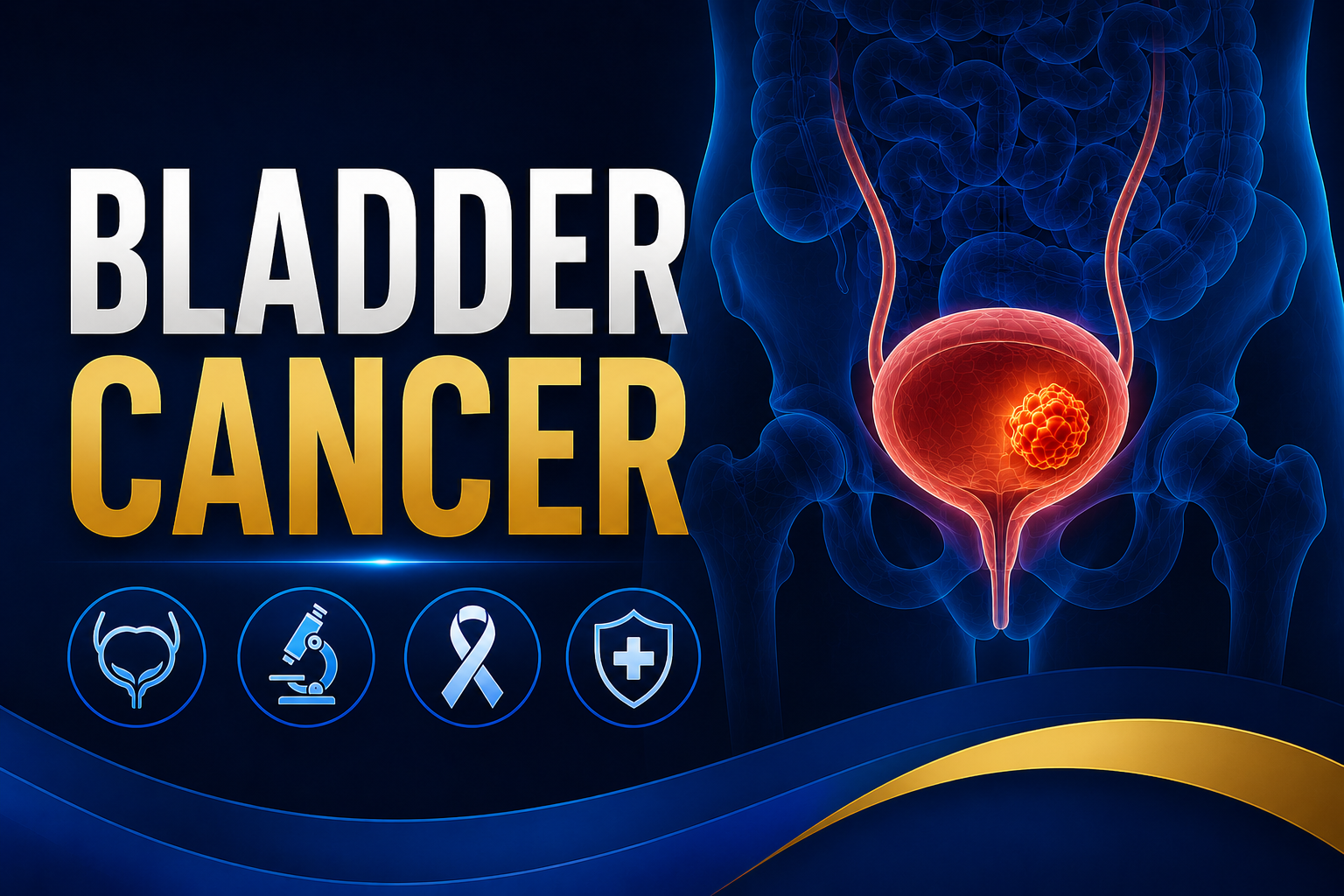
Bladder Cancer
Bladder Cancer
What is Bladder Cancer?
Bladder cancer occurs when abnormal cells in the lining of the urinary bladder grow uncontrollably and form a tumor. It is one of the most common cancers of the urinary tract and is more frequently seen in men, particularly in older adults.
When detected early, bladder cancer is often highly treatable. However, some types can recur and therefore require regular follow-up.
Common Symptoms
The most common symptom of bladder cancer is:
- Blood in the urine (hematuria) – usually painless and may occur intermittently.
Other symptoms may include:
- Frequent urination
- Urgency to pass urine
- Burning or pain during urination
- Difficulty passing urine
- Pelvic pain
- Flank pain in advanced disease
- Unexplained weight loss or fatigue
Any episode of blood in the urine should be evaluated by a urologist, even if it occurs only once.
Risk Factors
Factors that may increase the risk of bladder cancer include:
- Smoking and tobacco use
- Increasing age
- Occupational exposure to certain chemicals and dyes
- Chronic bladder irritation or infections
- Previous pelvic radiation therapy
- Certain medications
- Family history of bladder cancer
How is Bladder Cancer Diagnosed?
Evaluation may include:
- Detailed medical history and physical examination
- Urine analysis
- Urine cytology
- Ultrasound of the urinary tract
- CT Urography or CT scan of the abdomen and pelvis
- Cystoscopy (camera examination of the bladder)
- Bladder biopsy when required
Cystoscopy – The Key Diagnostic Test
Cystoscopy is the most important investigation for diagnosing bladder cancer. A small camera is passed through the urethra to examine the inside of the bladder and identify any abnormal growths.
If a suspicious lesion is found, a biopsy or surgical removal may be recommended.
Types of Bladder Cancer
Bladder cancer is broadly classified into:
Non-Muscle Invasive Bladder Cancer (NMIBC)
The cancer is confined to the inner lining of the bladder and has not invaded the muscle layer.
Muscle-Invasive Bladder Cancer (MIBC)
The cancer has grown into the muscle of the bladder and usually requires more aggressive treatment.
Treatment Options
Treatment depends on the stage, grade, and extent of the disease.
Transurethral Resection of Bladder Tumor (TURBT)
TURBT is an endoscopic procedure performed through the natural urinary passage to remove bladder tumors and obtain tissue for diagnosis.
This is usually the first treatment for most bladder cancers.
Intravesical Therapy
Patients with certain types of non-muscle invasive bladder cancer may require medications that are administered directly into the bladder, including:
- Bacillus Calmette-Guérin (BCG) therapy
- Intravesical chemotherapy
These treatments help reduce the risk of recurrence and progression.
Radical Cystectomy
For muscle-invasive or high-risk bladder cancer, complete removal of the bladder may be necessary.
This surgery may involve:
- Removal of nearby lymph nodes
- Urinary diversion and reconstruction
Urinary Diversion and Reconstruction
After bladder removal, urine can be diverted through:
- Ileal conduit
- Continent urinary diversion
- Orthotopic neobladder in selected patients
Chemotherapy and Immunotherapy
Patients with advanced or metastatic bladder cancer may benefit from:
- Chemotherapy
- Immunotherapy
- Combination systemic treatments
- Multidisciplinary cancer care
Why Follow-Up is Important
Bladder cancer has a tendency to recur even after successful treatment. Regular follow-up with cystoscopy and imaging is essential for early detection of recurrence and long-term disease control.
Comprehensive Bladder Cancer Care
Dr. Saurabh Thakkar provides expert evaluation and management of bladder cancer, including endoscopic treatment, surveillance, and counseling regarding advanced treatment options and urinary reconstruction when required.
Schedule a consultation for evaluation of blood in the urine or suspected bladder cancer.