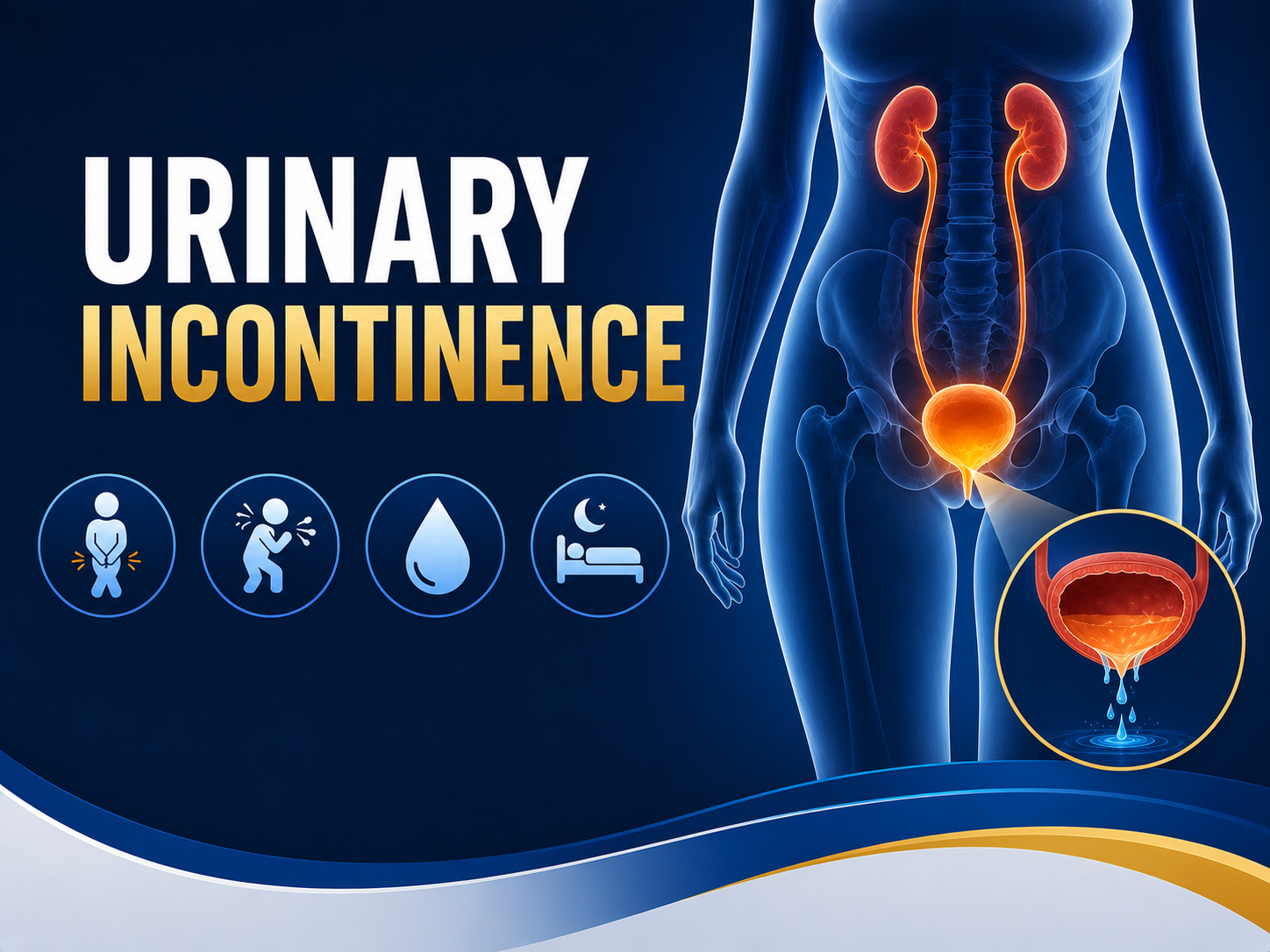
Urinary Incontinence
What is Urinary Incontinence?
Urinary incontinence is the involuntary leakage of urine due to a loss of bladder control. It is a common condition that can affect both men and women and may range from occasional urine leakage to a complete inability to control urination.
Although urinary incontinence becomes more common with age, it is not a normal part of aging and can often be successfully treated.
Common Symptoms
- Leakage of urine during coughing, sneezing, laughing, or exercise
- Sudden, strong urge to urinate followed by urine leakage
- Frequent urination
- Difficulty reaching the toilet in time
- Leakage during physical activity
- Night-time urination (nocturia)
- Continuous dribbling of urine
- Feeling of incomplete bladder emptying
Types of Urinary Incontinence
Stress Urinary Incontinence
Urine leakage occurs when pressure is placed on the bladder during activities such as coughing, sneezing, lifting weights, or exercising.
Urge Urinary Incontinence
A sudden, difficult-to-control urge to urinate followed by leakage. This is often associated with an overactive bladder.
Overflow Incontinence
Occurs when the bladder does not empty completely, leading to frequent dribbling of urine.
Mixed Urinary Incontinence
A combination of stress and urge urinary incontinence.
Causes
Urinary incontinence can result from a variety of conditions, including:
- Overactive bladder
- Enlarged prostate (BPH)
- Urinary tract infections
- Urethral stricture
- Neurological disorders
- Diabetes
- Pelvic floor muscle weakness
- Previous pelvic or prostate surgery
- Bladder outlet obstruction
Diagnosis
A comprehensive evaluation may include:
- Detailed medical history and symptom assessment
- Physical examination
- Urine analysis
- Bladder diary
- Ultrasound of the urinary tract
- Uroflowmetry (urine flow test)
- Post-void residual urine measurement
- Urodynamic studies
- Cystoscopy when required
Treatment Options
Treatment depends on the type and severity of incontinence and the underlying cause.
Lifestyle and Behavioral Therapy
Many patients experience significant improvement with:
- Fluid management
- Bladder training
- Timed voiding
- Weight reduction
- Limiting caffeine and alcohol intake
Pelvic Floor Muscle Exercises
Pelvic floor strengthening exercises can improve bladder control, particularly in patients with stress urinary incontinence.
Medications
Certain medications can help reduce urinary urgency, frequency, and urge-related leakage.
Advanced and Surgical Treatment Options
Botox Injections for Overactive Bladder
Botulinum toxin (Botox) can be injected into the bladder muscle to reduce urgency, frequency, and urge incontinence in patients who do not respond adequately to medications.
Sacral Neuromodulation
This advanced treatment uses gentle electrical stimulation of the nerves that control bladder function and may be recommended for selected patients with refractory urgency and urge incontinence.
Mid-Urethral Sling Surgery
A minimally invasive procedure commonly used for stress urinary incontinence in women. A supportive sling is placed beneath the urethra to prevent urine leakage during physical activities.
Male Sling Surgery
Men with mild to moderate stress urinary incontinence, particularly after prostate surgery, may benefit from sling procedures that provide additional support to the urethra and improve urinary control.
Artificial Urinary Sphincter (AUS)
The Artificial Urinary Sphincter is considered the gold standard treatment for moderate to severe male stress urinary incontinence, especially following prostate surgery. The device helps restore continence and significantly improves quality of life.
Treatment of Underlying Urological Conditions
In some patients, urinary incontinence improves after treating the underlying cause, such as:
- Enlarged prostate (BPH)
- Urethral stricture
- Bladder outlet obstruction
- Bladder stones
When Should You Consult a Urologist?
You should seek medical evaluation if:
- Urine leakage affects your daily activities
- Symptoms are worsening over time
- You have recurrent urinary tract infections
- There is associated blood in the urine
- You have difficulty emptying your bladder