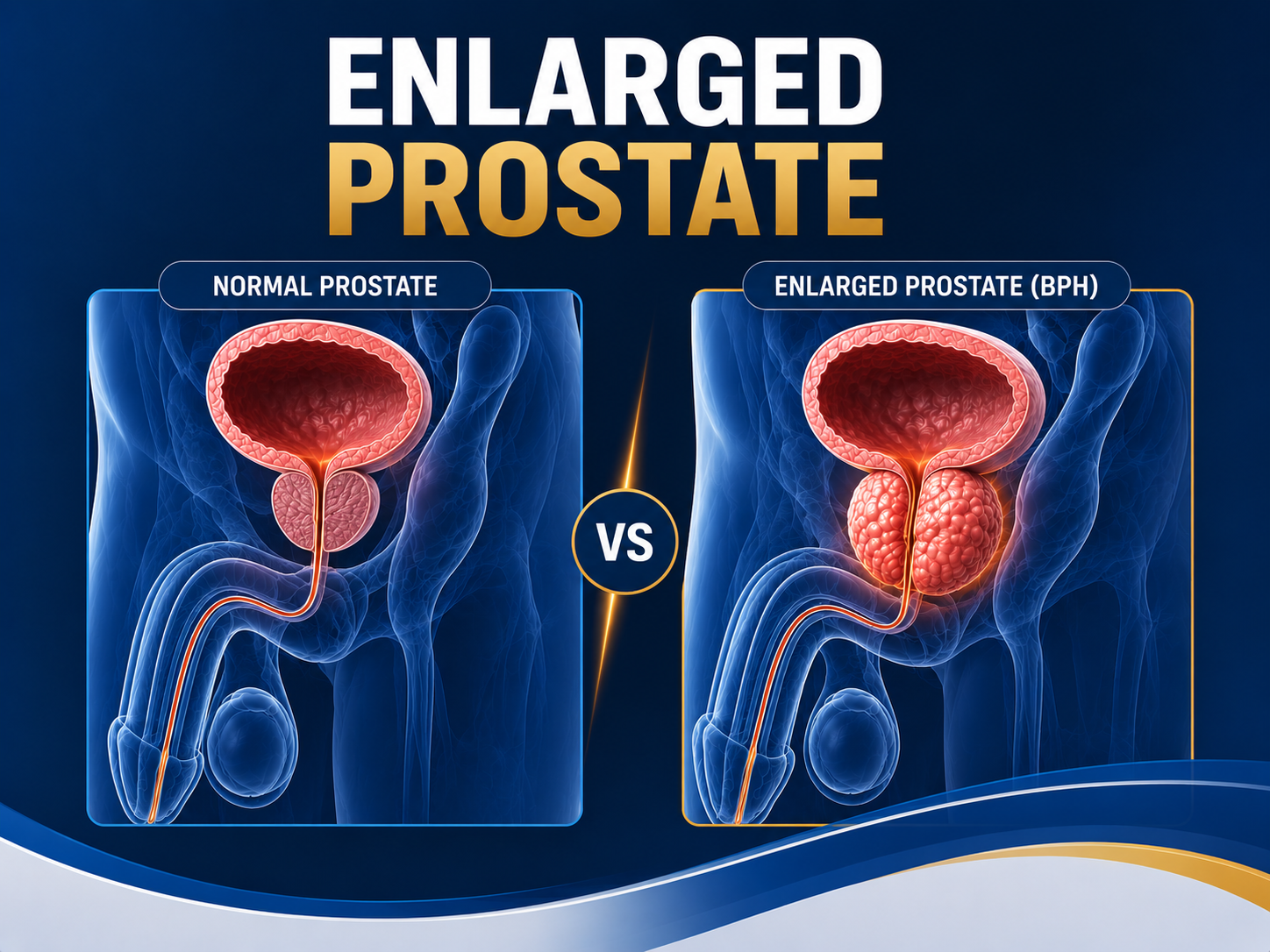
Enlarged Prostate (BPH)
What is Benign Prostatic Hyperplasia (BPH)?
Benign Prostatic Hyperplasia (BPH), commonly known as an enlarged prostate, is a non-cancerous enlargement of the prostate gland that occurs as men age. As the prostate grows, it can compress the urethra and obstruct the flow of urine, leading to bothersome urinary symptoms.
BPH is one of the most common urological conditions affecting men over the age of 50.
Common Symptoms
- Frequent urination, especially at night
- Urgency to pass urine
- Weak urine stream
- Difficulty starting urination
- Straining while passing urine
- Dribbling after urination
- Feeling of incomplete bladder emptying
- Sudden inability to pass urine (urinary retention)
Causes and Risk Factors
- Increasing age
- Hormonal changes
- Family history of prostate enlargement
- Obesity and metabolic syndrome
- Diabetes and cardiovascular disease
Diagnosis
Evaluation may include:
- Detailed symptom assessment
- Physical examination including Digital Rectal Examination (DRE)
- Urine analysis
- PSA (Prostate-Specific Antigen) testing
- Ultrasound of the urinary tract and prostate
- Uroflowmetry (urine flow test)
- Measurement of post-void residual urine
- Cystoscopy in selected cases
Treatment Options
Treatment depends on the severity of symptoms, prostate size, and individual patient preferences.
Lifestyle Modifications
Mild symptoms may improve with:
- Limiting fluids before bedtime
- Reducing caffeine and alcohol intake
- Bladder training strategies
- Weight management
Medications
Commonly prescribed medications include:
- Alpha-blockers to improve urine flow
- 5-alpha reductase inhibitors to reduce prostate size
- Combination therapy in selected patients
Minimally Invasive Prostate Treatments
For patients who wish to avoid major surgery or long-term medications, several advanced minimally invasive options are available.
Rezūm™ Water Vapor Therapy
Rezūm uses the natural energy stored in water vapor (steam) to shrink excess prostate tissue causing blockage.
Benefits include:
- Minimally invasive outpatient procedure
- Preservation of sexual function in most patients
- No surgical incisions
- Rapid recovery and symptom improvement
UroLift® System
The UroLift procedure uses small implants to lift and hold enlarged prostate tissue away from the urethra, improving urine flow without removing prostate tissue.
Benefits include:
- Immediate relief of obstruction
- Preservation of sexual and ejaculatory function
- Quick recovery
- Usually performed as a day-care procedure
iTind™ Procedure
iTind is a temporary implant that reshapes the prostatic urethra and bladder neck to improve urine flow.
Benefits include:
- No cutting, heating, or removal of tissue
- Minimally invasive treatment
- Preservation of sexual function
- Short recovery period
Surgical Treatment
Patients with severe symptoms, very large prostates, recurrent urinary retention, bladder stones, recurrent infections, or kidney damage may require surgery.
Common surgical options include:
- TURP (Transurethral Resection of the Prostate)
- Holmium Laser Enucleation of the Prostate (HoLEP)
- Simple Prostatectomy
Why Early Treatment Matters
Untreated BPH can lead to:
- Recurrent urinary retention
- Recurrent urinary tract infections
- Bladder stones
- Bladder damage
- Kidney impairment