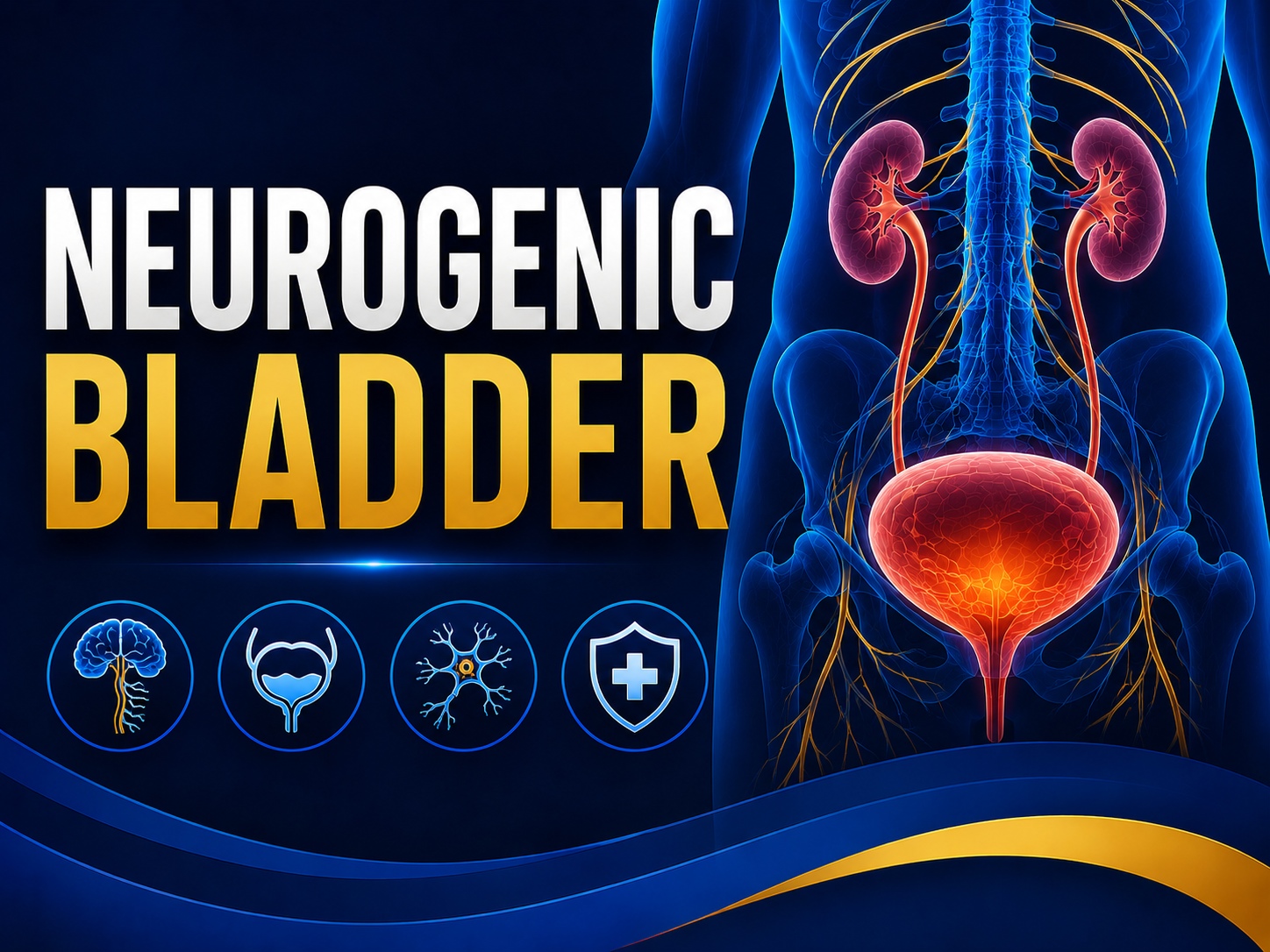
Neurogenic Bladder
Neurogenic Bladder
What is Neurogenic Bladder?
Neurogenic bladder is a condition in which the nerves that control the bladder do not function properly, leading to problems with storing or emptying urine. Depending on the type of nerve dysfunction, the bladder may become overactive, underactive, or lose its ability to empty completely.
If left untreated, neurogenic bladder can lead to recurrent urinary tract infections, bladder damage, kidney problems, and a significant impact on quality of life.
Common Symptoms
- Frequent urination
- Sudden urgency to pass urine
- Urinary incontinence (leakage of urine)
- Difficulty starting urination
- Weak urine stream
- Feeling of incomplete bladder emptying
- Urinary retention (inability to empty the bladder)
- Recurrent urinary tract infections
- Waking up multiple times at night to urinate
Causes
Neurogenic bladder can occur due to conditions affecting the brain, spinal cord, or peripheral nerves, including:
- Spinal cord injury
- Stroke
- Parkinson's disease
- Multiple sclerosis
- Diabetes mellitus
- Spina bifida
- Disc disease and spinal surgery
- Pelvic trauma
- Certain neurological disorders
Why is Neurogenic Bladder Important?
Poor bladder function can result in:
- Recurrent urinary tract infections
- Bladder stones
- Urinary incontinence
- Kidney swelling (hydronephrosis)
- Progressive kidney damage
- Reduced quality of life
Early diagnosis and appropriate management are essential to protect long-term bladder and kidney function.
Diagnosis
A comprehensive evaluation may include:
- Detailed medical history and physical examination
- Urine analysis and urine culture
- Ultrasound of the kidneys and bladder
- Post-void residual urine measurement
- Uroflowmetry (urine flow test)
- Urodynamic studies
- Cystoscopy when indicated
- Additional neurological investigations in selected patients
Treatment Options
Treatment depends on the type of bladder dysfunction, symptoms, and underlying neurological condition.
Lifestyle and Behavioral Measures
- Timed voiding
- Fluid management
- Bladder training in selected patients
- Prevention and treatment of constipation
Medications
Certain medications may help:
- Relax an overactive bladder
- Improve bladder storage
- Reduce urinary urgency and frequency
- Facilitate bladder emptying in selected cases
Clean Intermittent Catheterization (CIC)
For patients who are unable to empty their bladder completely, clean intermittent catheterization is often the safest and most effective way to protect the kidneys and reduce complications.
Indwelling Catheter or Suprapubic Catheter
Some patients may require long-term catheter drainage when intermittent catheterization is not feasible.
Advanced Treatment Options
Botox Injections into the Bladder
Botulinum toxin (Botox) injections can help relax an overactive neurogenic bladder, reducing urgency, incontinence, and bladder pressures.
Sacral Neuromodulation (SNM)
Selected patients with certain types of neurogenic bladder may benefit from neuromodulation therapies that improve bladder function.
Reconstructive Surgery
Patients with severe or poorly compliant bladders may occasionally require reconstructive procedures, including:
- Augmentation cystoplasty
- Urinary diversion in selected cases
- Surgical procedures to improve urinary continence
Long-Term Follow-Up
Patients with neurogenic bladder require regular follow-up to monitor:
- Kidney function
- Bladder function
- Urinary infections
- Upper urinary tract changes
The primary goals of treatment are to preserve kidney function, prevent complications, and improve quality of life.
Specialized Neuro-Urology Care
Dr. Saurabh Thakkar provides comprehensive evaluation and management of neurogenic bladder, offering individualized treatment plans ranging from medications and catheter-based management to advanced reconstructive and minimally invasive therapies.
Schedule a consultation for expert evaluation of bladder problems associated with neurological conditions.