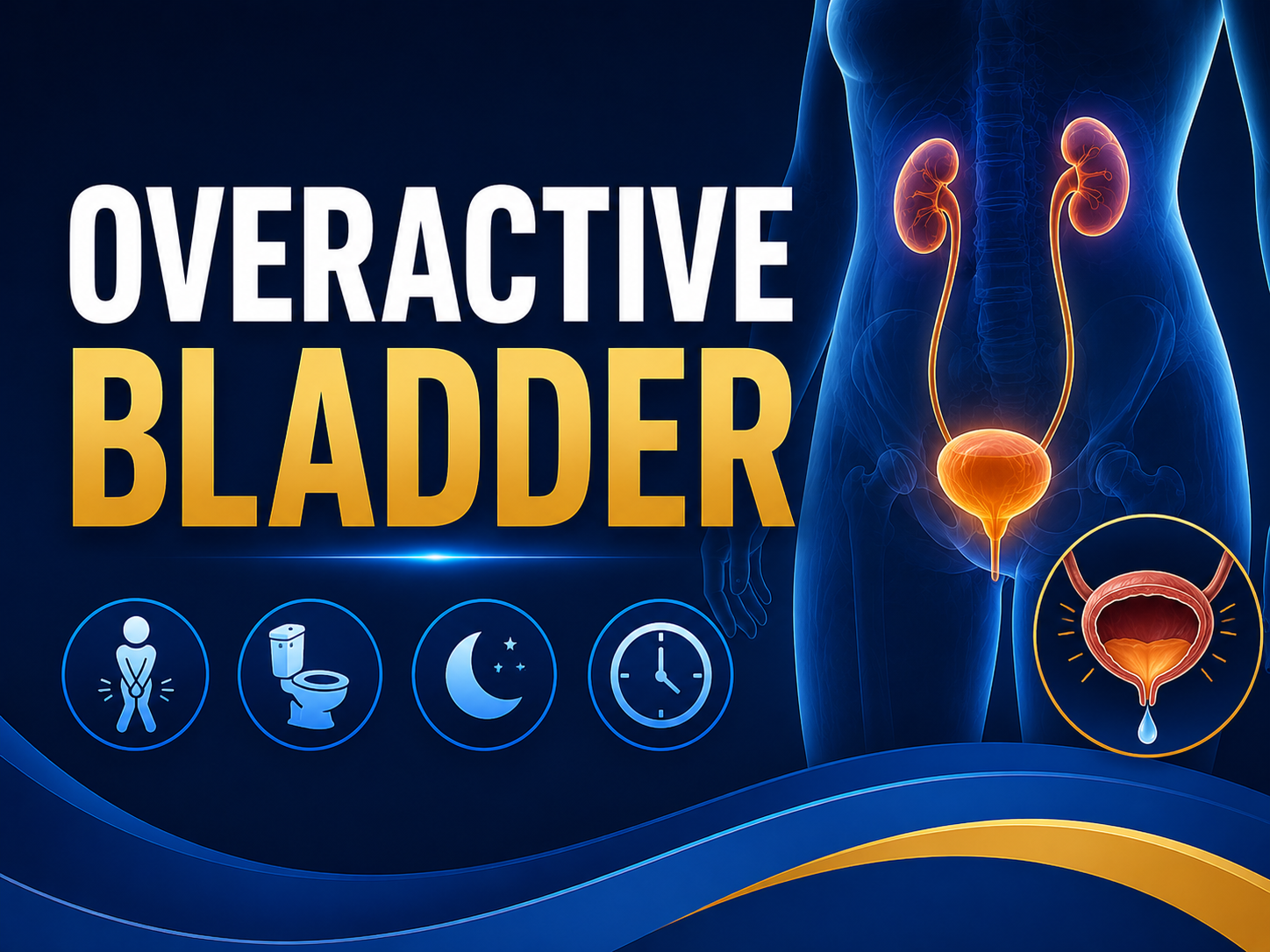
Overactive Bladder
What is Overactive Bladder?
Overactive Bladder (OAB) is a condition characterized by a sudden, difficult-to-control urge to urinate, often accompanied by frequent urination and waking up multiple times at night to pass urine. Some patients may also experience urge urinary incontinence, where urine leaks before reaching the toilet.
OAB can affect both men and women and may significantly impact daily activities, sleep, work, and quality of life.
Common Symptoms
- Sudden, strong urge to urinate (urgency)
- Frequent urination during the day
- Waking up multiple times at night to urinate (nocturia)
- Difficulty postponing urination
- Urine leakage associated with urgency (urge incontinence)
- Feeling that the bladder controls your daily routine
Causes
In many patients, no specific cause is identified. However, OAB may be associated with:
- Aging-related bladder changes
- Enlarged prostate (BPH)
- Urinary tract infections
- Bladder stones
- Neurological disorders
- Diabetes
- Previous pelvic surgery
- Excessive caffeine or alcohol intake
Diagnosis
A thorough evaluation is important to identify any underlying condition that may be causing bladder symptoms.
Investigations may include:
- Detailed medical history and symptom assessment
- Physical examination
- Urine analysis
- Bladder diary
- Ultrasound of the urinary tract
- Uroflowmetry (urine flow test)
- Post-void residual urine measurement
- Urodynamic studies in selected patients
- Cystoscopy when indicated
Treatment Options
Treatment is individualized and depends on symptom severity and underlying causes.
Lifestyle and Behavioral Therapy
Many patients improve with simple lifestyle modifications such as:
- Reducing caffeine and alcohol intake
- Managing fluid consumption
- Bladder training
- Timed voiding
- Weight management
Pelvic Floor Muscle Training
Pelvic floor exercises can help improve bladder control and reduce urgency symptoms.
Medications
Several medications can help relax the bladder muscle, reduce urgency, and decrease urinary frequency.
Advanced Treatment Options
Botox Injections into the Bladder
Botulinum toxin (Botox) can be injected into the bladder muscle to reduce involuntary bladder contractions and improve symptoms of urgency, frequency, and urge incontinence.
This treatment is particularly effective for patients who do not achieve adequate relief with medications.
Sacral Neuromodulation (SNM)
Sacral Neuromodulation uses gentle electrical stimulation of the nerves that control bladder function. It may be recommended for patients with persistent symptoms despite conservative treatment.
Percutaneous Tibial Nerve Stimulation (PTNS)
PTNS is a minimally invasive treatment that stimulates nerves involved in bladder control and may help reduce urgency and frequency symptoms.
When Should You Consult a Urologist?
You should seek medical evaluation if:
- Frequent urination is affecting your daily life
- You wake up multiple times at night to urinate
- You experience sudden urgency or urine leakage
- Symptoms persist despite lifestyle changes
- There is associated blood in the urine or recurrent infections