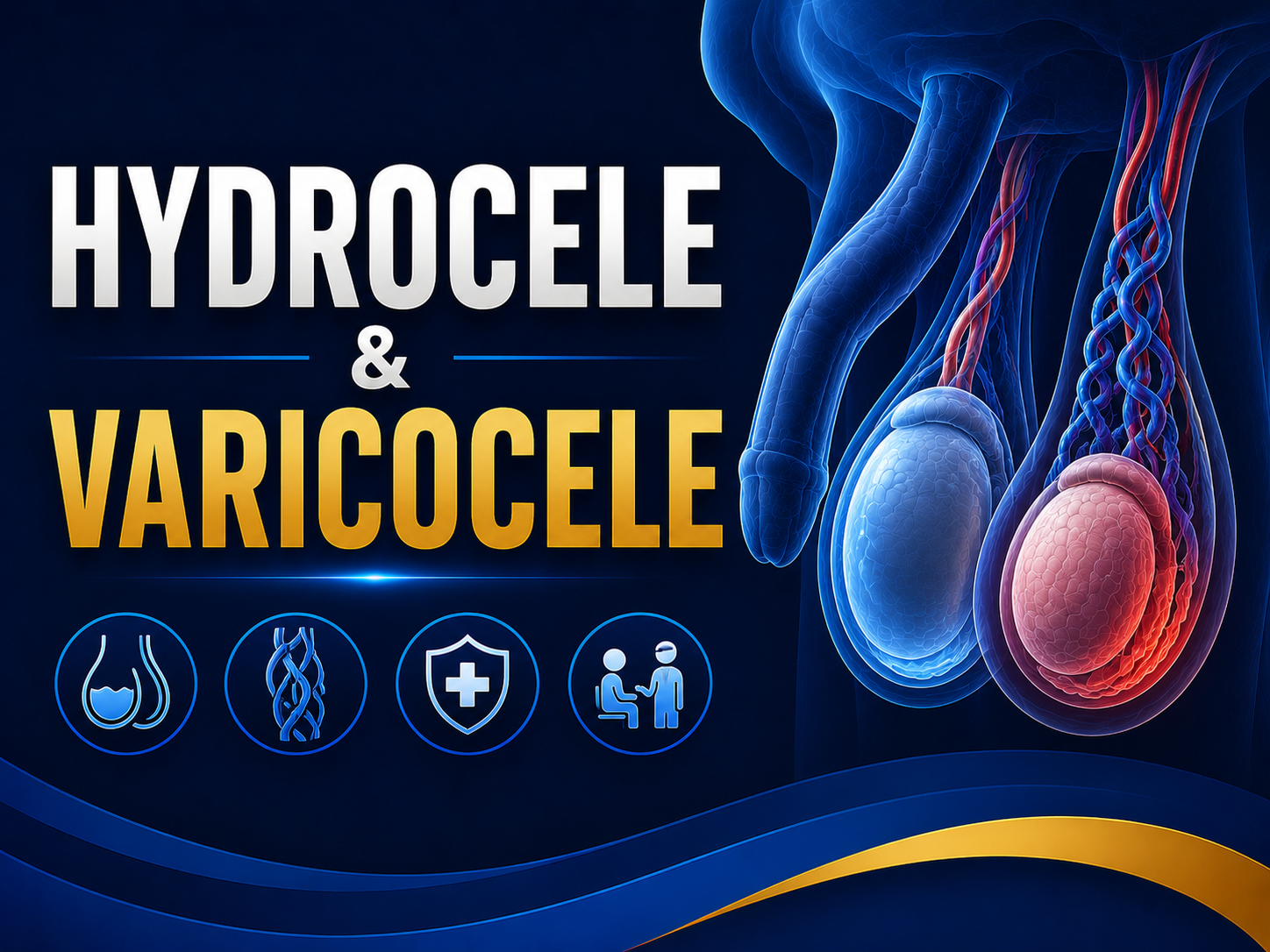
Hydrocele & Varicocele
Hydrocele & Varicocele
What are Hydrocele and Varicocele?
Hydrocele and varicocele are two common conditions that cause swelling of the scrotum.
A hydrocele is the collection of fluid around the testicle, resulting in painless scrotal swelling. A varicocele is an enlargement of the veins within the scrotum, similar to varicose veins in the legs. While hydroceles are usually harmless, varicoceles can sometimes affect fertility and testicular function.
Both conditions are common and can often be treated effectively.
Hydrocele
What is a Hydrocele?
A hydrocele occurs when fluid accumulates around the testicle, causing swelling of the scrotum. It may develop on one or both sides and is usually painless.
Common Symptoms
- Painless swelling of the scrotum
- Feeling of heaviness or discomfort
- Increase in the size of the swelling over time
- Difficulty with daily activities due to the size of the swelling
Causes
- Idiopathic (most common in adults)
- Previous infection or inflammation
- Trauma to the scrotum
- Following surgery
- Rarely, underlying testicular conditions
Diagnosis
Evaluation may include:
- Physical examination
- Transillumination test
- Scrotal ultrasound to confirm the diagnosis and exclude other conditions
Treatment
Small, asymptomatic hydroceles may simply be observed.
Hydrocelectomy
Surgical removal of the hydrocele is the definitive treatment for symptomatic or large hydroceles and provides excellent long-term results.
Varicocele
What is a Varicocele?
A varicocele is an abnormal enlargement of the veins that drain the testicle. It most commonly occurs on the left side and is one of the most common treatable causes of male infertility.
Common Symptoms
Many men have no symptoms. Others may experience:
- Dull aching pain or discomfort in the scrotum
- Feeling of heaviness
- Visible or enlarged veins in the scrotum
- Decrease in testicular size
- Difficulty conceiving
Why is Varicocele Important?
Varicoceles may affect:
- Sperm count
- Sperm motility
- Sperm quality
- Testicular growth and function
- Male fertility
Diagnosis
Evaluation may include:
- Physical examination
- Semen analysis
- Hormonal evaluation in selected cases
- Scrotal ultrasound with Doppler study
Treatment
Treatment may be recommended for:
- Pain or discomfort
- Abnormal semen parameters
- Infertility
- Testicular atrophy
- Adolescents with impaired testicular growth
Microsurgical Varicocelectomy
Microsurgical varicocelectomy is considered the gold standard treatment for symptomatic varicocele and infertility associated with varicocele.
Benefits include:
- Improved semen parameters
- Improved fertility potential
- Lower recurrence rates
- Lower risk of complications
When Should You Consult a Urologist?
You should seek medical evaluation if you have:
- Persistent scrotal swelling
- A lump or heaviness in the scrotum
- Scrotal pain or discomfort
- Fertility concerns
- Changes in testicular size
Comprehensive Scrotal and Male Fertility Care
Dr. Saurabh Thakkar provides expert evaluation and treatment of hydrocele and varicocele, offering personalized treatment plans including hydrocelectomy and microsurgical varicocelectomy when indicated.
Schedule a consultation for evaluation of scrotal swelling, discomfort, or male fertility concerns.